
Search
Search for audiobooks, authors, or narrators
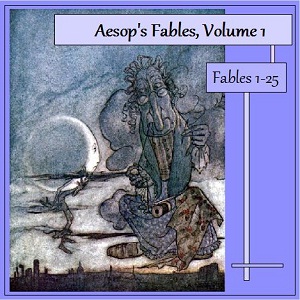
Aesop's Fablers
Dating back to the 6th century BC, Aesop's Fables tell universal truths through the use of simple allegories that are easily understood. Though almost nothing is known of Aesop himself, and some scholars question whether he existed at all, these stories stand as timeless classics known in almost every culture in the world. This is volume 1 of 12. (Summary by Chip) | By Aesop | Narrated by: LibriVox Volunteers
LibriVox Volunteers
LibriVox Volunteers
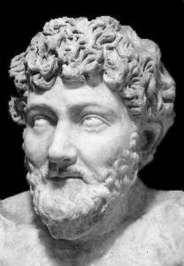
Aesop
Aesop (/ˈiːsɒp/ EE-sop; Ancient Greek: Αἴσωπος, Aísōpos; c. 620 – 564 BCE; formerly rendered as Æsop) was a Greek fabulist and storyteller credited with a number of fables now collectively known as Aesop's Fables. Although his existence remains unclear and no writings by him survive, numerous tales credited to him were gathered across the centuries and in many languages in a storytelling tradition that continues to this day. Many of the tales associated with him are characterized by anthropomorphic animal characters.
Arabic Language Learning Collection
This is a collection of chapters and sections from materials designed to teach the Arabic language, as well as reference materials related to Arabic, materials about the Arabic language and a selection of materials in Arabic to allow the student to practise his or her listening comprehension skills and pronunciation. The materials include course books, modern grammars and traditional Arabic grammatical works, including the Ajurrumiyyah of Ibn Ajurrum and the Mi'at Amil of Jurjani. They each focus on different aspects of the two core science of Arabic grammar, viz. nahw (syntax) and sarf (morphology). Some of the Arabic-language materials come from religious books, such as the Holy Qur’án, which has been studied by new students of Arabic for more than a thousand years, as well as al-Kitábu’l-’Aqdas (the Most Holy Book) of Bahá’u’lláh, which comes from the most recent of the Abrahamic religions. I hope that this collection will provide the student with the tools he or she needs to begin studying the Arabic language. Listening to audio materials, however useful, must be combined with study of the writing system, reading written texts and practical exercise of the language. (Summary by Nicholas J. Bridgewater) | By Various | Narrated by: various
various
Lorem ipsum dolor sit amet consectetur adipiscing elit. Consectetur adipiscing elit quisque faucibus ex sapien vitae. Ex sapien vitae pellentesque sem placerat in id. Placerat in id cursus mi pretium tellus duis. Pretium tellus duis convallis tempus leo eu aenean.
Various
Lorem ipsum dolor sit amet consectetur adipiscing elit. Consectetur adipiscing elit quisque faucibus ex sapien vitae. Ex sapien vitae pellentesque sem placerat in id. Placerat in id cursus mi pretium tellus duis. Pretium tellus duis convallis tempus leo eu aenean.